01
Why paper waivers fail exactly when you need them
A filing cabinet of signed waivers feels like protection right up until the moment it is tested. The problems are rarely dramatic — a form was signed but filed under a maiden name, a member updated their details and the old sheet was never matched to the new record, a busy intake week meant three people trained before anyone remembered the paperwork.
None of that matters for years, and then it matters enormously in a single afternoon. The question is never whether you have waivers — it is whether you can produce this specific person's signed waiver, and prove when they signed it. Paper answers the first question well and the second one badly.
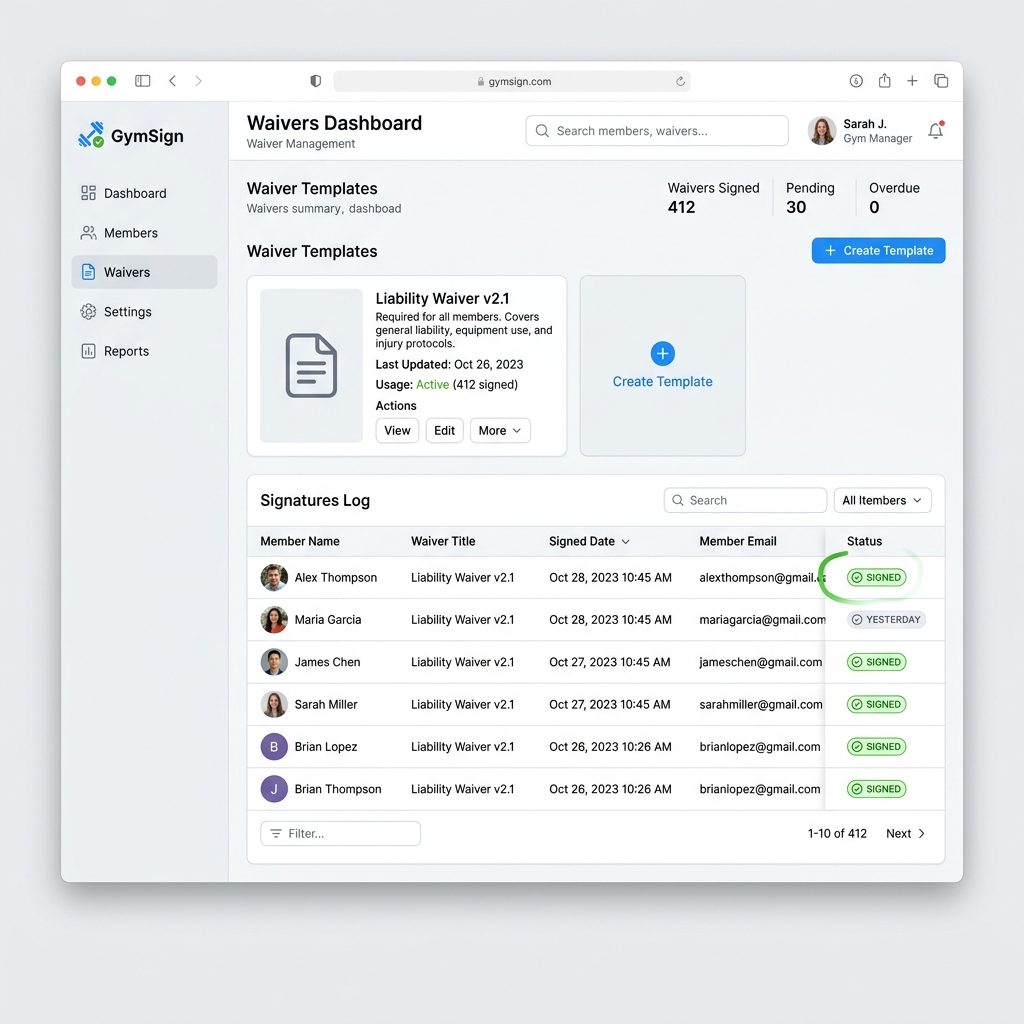
Digital signing closes the gap in both directions. The waiver is presented as part of joining rather than as a separate errand, and the record is retrievable by name in seconds rather than by an afternoon in the records room.
02
What makes a waiver record actually useful
Three things separate a waiver system that helps from one that just moves the filing cabinet onto a hard drive.
The first is enforcement at the right moment. A waiver chased after someone has already trained is a compliance record with a hole in it. Requiring a signed waiver before a member can join a program means the sequence is right by construction rather than by staff discipline.
The second is the timestamp. Who signed and exactly when is the detail that carries weight in a dispute, and it is precisely the detail handwritten forms tend to lose. The third is retrieval speed — not because anyone enjoys searching, but because the confidence to answer an insurer or a solicitor immediately changes the tone of the entire conversation.
Worth stating plainly: the software handles signing, storage and retrieval. The wording of your waiver is a legal question, and it belongs with a lawyer who knows your jurisdiction and your activity. Good tooling around bad wording is still bad wording.
03
Waivers for children, families and casual visitors
Martial arts schools, dance studios and youth programs carry the hardest version of this problem, because the person training and the person signing are different people, and the parent who signs in February may not be the parent doing pickup in October.
The same is true of the casual edge cases every gym has: the friend brought along for a trial class, the visiting athlete dropping in for a week, the parent who joins the beginner class alongside their child. These are exactly the people most likely to slip through a paper process, and exactly the people whose signed waiver you would most want on file.
Handling this well is mostly about removing friction. When signing happens on a phone, at the point of joining, as part of a flow someone is already completing, the completion rate looks nothing like it does when the same person is handed a clipboard and a pen they have to return.